AGING IN PLACE OR DOWNSIZING: FINDING THE RIGHT PATH FOR YOUR NEXT CHAPTER
October 22, 2026
Life Transitions & Downsizing

October 22, 2026
Life Transitions & Downsizing
For many longtime homeowners, there eventually comes a question that is surprisingly difficult to answer:
Should we stay, or should we move?
The home may hold decades of memories.
You know the neighbors.
You know where the afternoon light falls.
You know every creak, shortcut, cabinet, and corner.
Leaving isn't an easy idea.
But staying can raise questions too.
Is the house larger than you need?
Are the stairs becoming inconvenient?
How much time do you spend maintaining the property?
Would you rather live closer to family, friends, restaurants, healthcare, or everyday activities?
Could a different home make life easier without feeling smaller?
There isn't one right answer.
For some people, adapting the home they already love makes perfect sense.
For others, moving creates possibilities they didn't realize they were missing.
The important thing is to make the decision intentionally—before circumstances make it for you.
This may sound counterintuitive.
But before deciding whether to stay in your current home, stop thinking about the house itself for a moment.
Think about your life instead.
What does an ideal ordinary week look like five years from now?
Where do you spend your mornings?
How often do you travel?
How much time do you want to spend maintaining a property?
Do you want to walk to restaurants or coffee?
How important is outdoor space?
Do family members visit frequently?
Would you prefer more privacy—or more community?
Once those priorities become clearer, bring the house back into the conversation.
Does it support that life?
If it does, staying may make perfect sense.
If it doesn't, the question becomes more interesting.

For many homeowners, the best home for the next chapter may be the one they already have.
Perhaps the property is mostly single-level.
The neighborhood works beautifully.
Friends and family are nearby.
The home is manageable.
You love the garden.
You feel connected to the community.
And the idea of moving would solve very few actual problems.
In that situation, aging in place may be less about doing nothing and more about thoughtfully adapting the home over time.
Small changes can make everyday living easier while letting you stay somewhere you already love.

A house that works perfectly today may need adjustments later.
Walk through your home and consider:
Are there stairs between essential living areas?
Is the primary bedroom on the main level?
Are entrances easy to navigate?
Are bathrooms comfortable and adaptable?
Is there good lighting?
Are walkways clear and manageable?
Could doorways or other areas be modified if necessary?
Can everyday items be reached easily?
None of this means turning a beautiful residence into something clinical.
Thoughtful design can make a home easier to navigate while remaining sophisticated and completely personal.
The best adaptations are often the ones you barely notice.

Sometimes the house works.
The property doesn't.
A large yard.
Pool maintenance.
Mature landscaping.
Multiple structures.
A long driveway.
Exterior upkeep.
Repairs that seem to multiply every year.
None of these are necessarily reasons to move.
Many can be managed with the right professionals.
The more useful question is:
Do you still want to manage them?
There is a difference between being capable of maintaining a property and wanting to spend your time that way.
If the home requires increasing attention while you increasingly want freedom, travel, or simplicity, that tension deserves consideration.

Stairs are often one of the first practical issues homeowners mention when thinking about the future.
But the answer isn't automatically to move.
Perhaps the essential living spaces are already on one level.
Perhaps a renovation could solve the problem.
Perhaps an elevator is feasible.
Or perhaps the architecture of the home simply doesn't lend itself well to future needs.
What matters is understanding the options before stairs become a daily limitation.
This is one reason single-level homes often become particularly desirable during a transition.
They're not only about today.
They preserve flexibility for tomorrow.
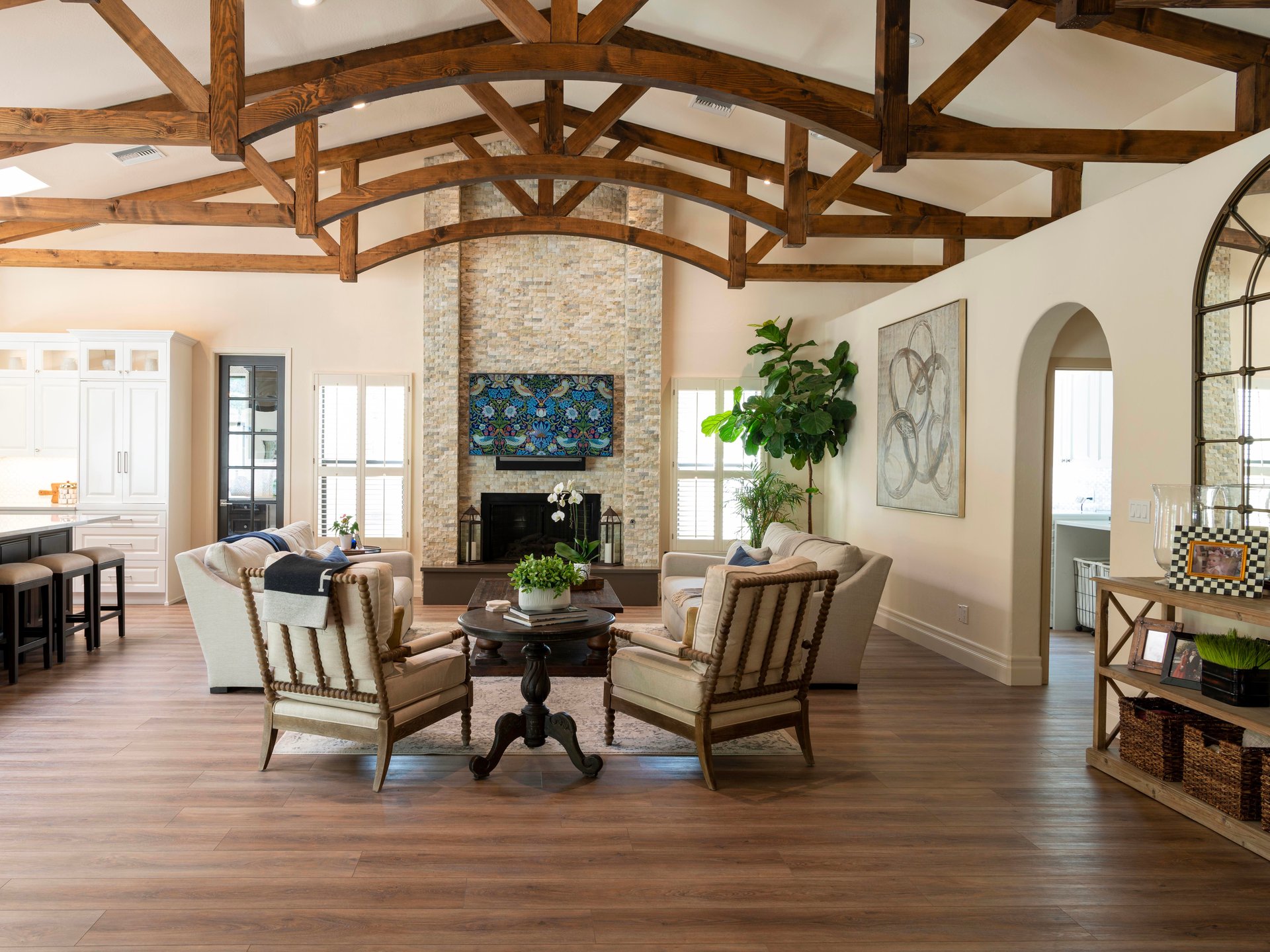
A home can work beautifully while its location becomes less convenient.
Consider the life surrounding the house.
How far are you from friends?
Family?
Healthcare?
Groceries?
Restaurants?
Activities you enjoy?
Can you walk anywhere?
Do you need to drive for nearly everything?
Would moving five or ten minutes away meaningfully change your everyday routine?
For some homeowners, the most compelling reason to move isn't a smaller house.
It's a better-connected life.
A residence closer to Coast Village Road, downtown Santa Barbara, the waterfront, or another walkable area may offer less private square footage but more access to the community beyond the front door.
Location can become part of the downsizing equation.

Imagine leaving for a month.
How much work does that require?
Do you worry about the landscaping?
The pool?
Security?
Maintenance?
Weather?
Multiple systems?
Does someone need to regularly check the property?
For homeowners who want to travel more, the ability to lock the door and leave can become a form of luxury in itself.
A condominium, smaller residence, or property with lower maintenance requirements may offer freedom that a larger home cannot.
That doesn't mean everyone should trade an estate for a condo.
It simply means convenience deserves a place alongside square footage when defining luxury.
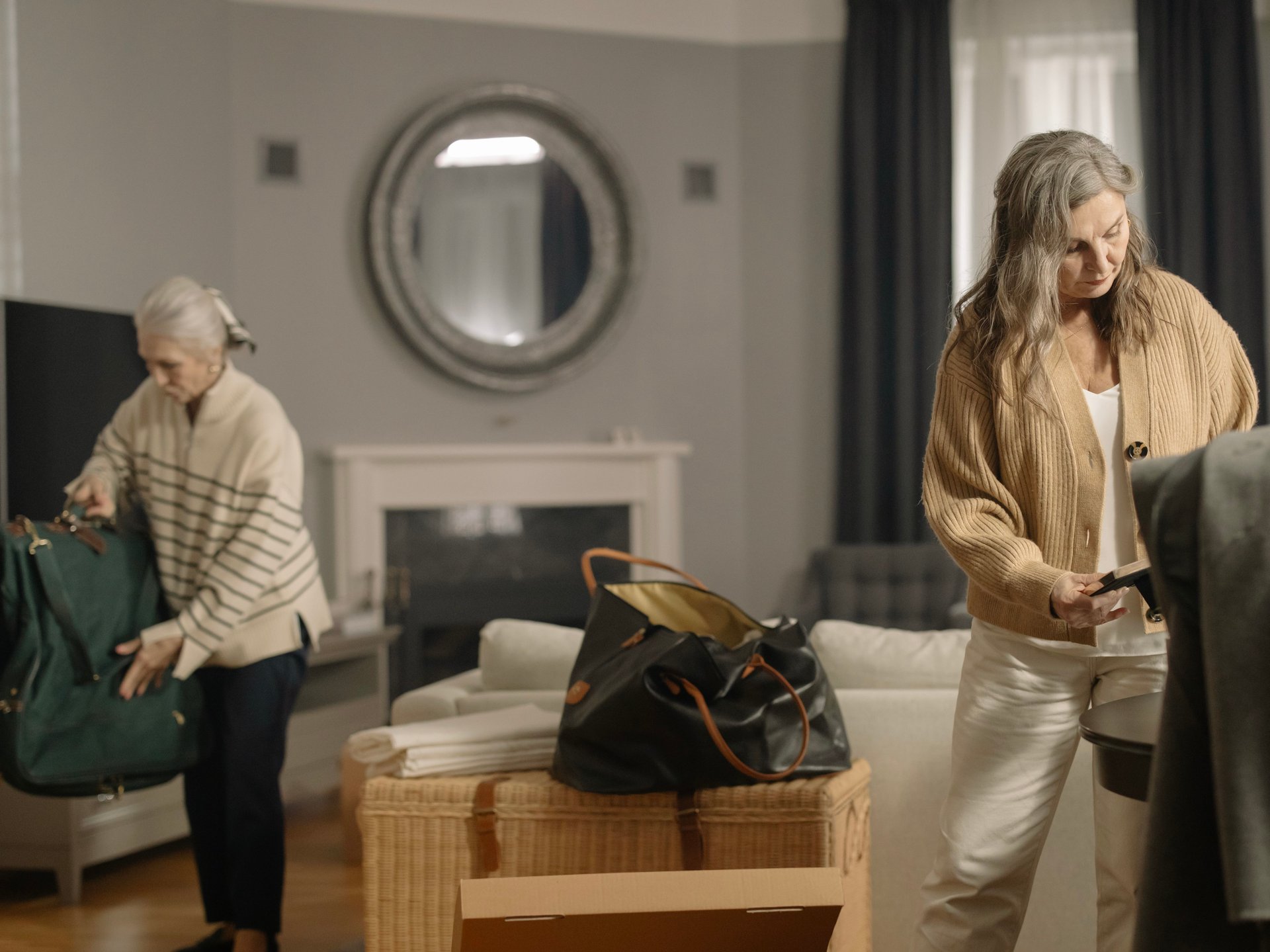
Emotion matters.
So does math.
Staying in a longtime home can involve property taxes, insurance, utilities, maintenance, landscaping, repairs, household help, and future improvements.
Moving comes with its own financial considerations: preparing and selling the current property, purchasing or renting another home, moving expenses, possible renovations, HOA dues, insurance, taxes, and other transaction costs.
There may also be tax and estate-planning considerations depending on your circumstances.
Rather than assuming one option is financially better, compare them.
A real estate professional can help you understand property values and housing options, while qualified tax, legal, and financial professionals can advise on issues within their respective areas.
The goal isn't simply to determine which home costs less.
It's to understand what each option allows your resources to do for you.

One of the greatest advantages you can give yourself is time.
When an unexpected event makes a move necessary, choices can narrow quickly.
Decisions become urgent.
Family members may need to step in.
Preparing the property can feel overwhelming.
You may choose the next home based on what's immediately available rather than what you actually want.
Starting the conversation earlier doesn't mean you have to move.
It means you can explore.
Tour homes.
Compare neighborhoods.
Understand your property's value.
Talk with family.
Investigate modifications.
Consider different scenarios.
And then decide.
You may ultimately choose to stay exactly where you are.
But it will be a decision rather than a default.

For many families, the home isn't emotionally significant only to its owners.
Adult children may have grown up there.
Family traditions may revolve around it.
Everyone may have an opinion about what should happen next.
That's why conversations about a future move can be valuable long before a decision is made.
What do the homeowners actually want?
Does anyone expect to keep the property?
Are family members assuming certain furniture or belongings will eventually come to them?
Who should be involved in decisions?
What kind of help would be useful?
Clear conversations today can prevent confusion later.
And importantly, the homeowner's own goals should remain at the center of the process.

Choosing to age in place shouldn't mean simply deciding not to move.
Make the home work harder for you.
Address the modifications that would improve daily life.
Simplify maintenance where possible.
Organize the property.
Improve lighting.
Consider future accessibility.
Build a reliable team for landscaping, repairs, housekeeping, or other tasks you'd rather not manage personally.
And revisit the decision periodically.
The home that works at 65 may need something different at 75.
There is no rule saying one decision has to last forever.

This may be the most important part.
Don't make the entire decision about what you're leaving.
Make it about what you're gaining.
Maybe the next home means walking to dinner.
Maybe it means living closer to your children.
Maybe it's a smaller garden you actually enjoy maintaining.
Maybe it's an elevator building.
A single-level residence.
A view.
A community.
A place you can leave for two months without worrying.
A home that's easier to manage.
A neighborhood that gets you out of the house more often.
The most successful transitions aren't simply about reducing.
They're about moving toward a life that fits better.

If you're beginning to think about the future, divide a piece of paper into two columns.
STAY
What do I love about this home?
What would need to change?
What would ongoing maintenance require?
Can the home adapt with me?
Does the location support the life I want?
What would make staying easier?
MOVE
What could another home improve?
Which features would become priorities?
Where would I want to live?
What would I happily give up?
What would I refuse to give up?
What could become easier?
Then add one final question beneath both columns:
Which option gives me more of the life I want?
You don't need to answer it today.
But it's a very good conversation to begin.
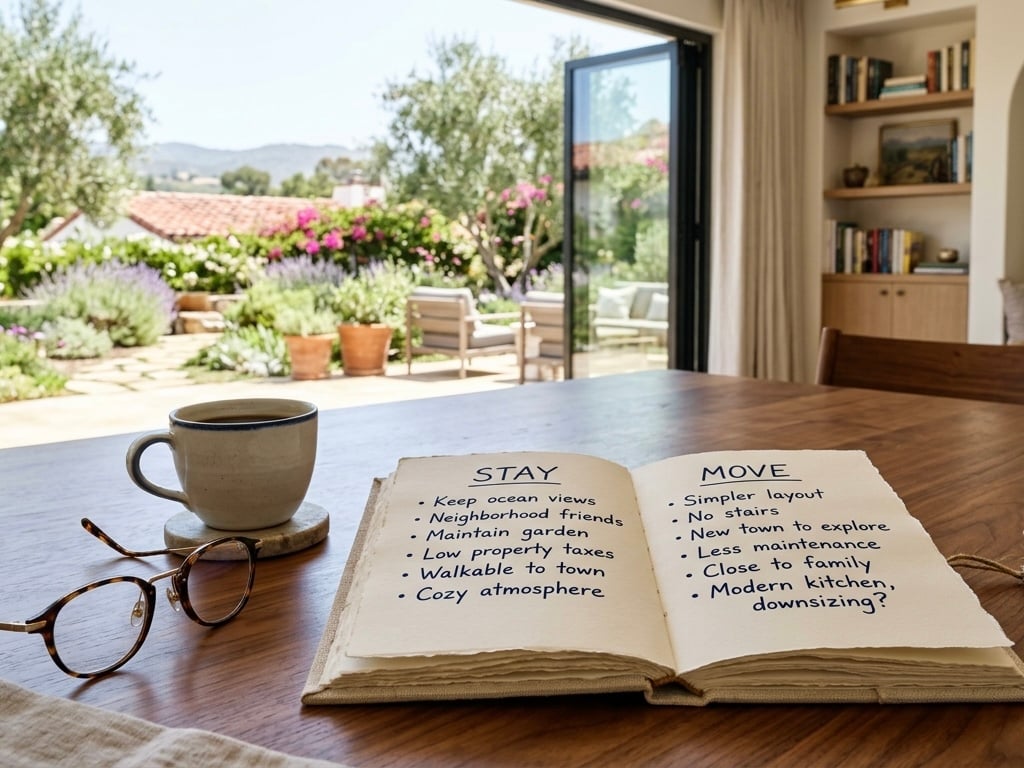
Some homeowners will stay.
Some will renovate.
Some will move across town.
Some will trade a large property for a condominium.
Some will move closer to family.
Some will keep Santa Barbara as their primary home and travel more.
And some will discover that they aren't ready to make any change at all.
All of those can be perfectly reasonable outcomes.
The goal isn't to convince yourself to move.
It's to understand your options while you still have the freedom to choose.
At REQUISITE Luxury Properties, we believe real estate transitions deserve more than a conversation about selling a house.
They deserve time.
Planning.
Local knowledge.
The right professionals.
And an understanding of the life you're trying to create on the other side.
Because sometimes the best next move is a new home.
Sometimes it's making your current home work better.
And knowing the difference is where a thoughtful transition begins.
Aging in place generally means remaining in your current home as you get older, sometimes with modifications, services, or other support that make the property easier and safer to use over time.
Consider your home's layout, maintenance requirements, location, accessibility, finances, social connections, travel plans, future needs, and how you want everyday life to feel. There is no universal answer.
Ideally, before moving becomes urgent. Starting early gives you time to explore neighborhoods and properties, organize belongings, understand your current home's value, discuss plans with family, and compare staying with moving.
Single-level living or easy access to essential rooms, manageable maintenance, good lighting, accessible bathrooms, convenient parking, practical storage, and proximity to everyday services can all be worth considering.
Not necessarily. Costs vary widely depending on your current property, the replacement home, taxes, insurance, maintenance, HOA fees, transaction costs, and other financial considerations. Comparing the complete picture is more useful than comparing square footage alone.
Depending on your situation, the team may include a real estate professional, financial advisor, attorney, tax professional, organizer, estate-sale specialist, contractor, mover, designer, or other specialists. Not every transition requires all of them.
The best realtor combines local market expertise with personalized service and a deep understanding of the luxury lifestyle.
At REQUISITE Luxury Properties, we help buyers and sellers navigate the luxury market with local expertise, strategic guidance, and exceptional client care.
Stay up to date on the latest real estate trends.
Life Transitions & Downsizing
October 22, 2026
There's no one-size-fits-all answer. Discover how your lifestyle, comfort, and long-term goals can guide your next move.

Homeownership & Lifestyle
October 16, 2026
Simple ways to prepare your Santa Barbara home for the season ahead.

Homeownership & Lifestyle
October 9, 2026
A smaller home doesn't have to mean a smaller life. Sometimes, the right move is about creating more room for what matters now.

Community & Local Living
October 1, 2026
From wine harvest and fresh seafood to art, music, golden-hour walks, and warm days by the coast—October may be one of Santa Barbara's best-kept seasonal secrets.

Homeownership & Lifestyle
September 24, 2026
White stucco, red tile roofs, hidden courtyards, hand-painted tile, and centuries of influence—an architectural language that makes Santa Barbara unmistakable.

Community & Local Living
September 17, 2026
Fresh from the Pacific, grown along the Central Coast, and shaped by a culture that knows the best meals often begin close to home.

Homeownership & Lifestyle
September 10, 2026
Courtyards, open doors, garden rooms, and ocean-facing terraces—where the architecture of home is shaped by the landscape outside.

Community & Local Living
September 3, 2026
Harvest season, golden afternoons, and unforgettable wine-country escapes just beyond the coast.

Community & Local Living
August 27, 2026
Your guide to art, music, coastal celebrations, and the experiences welcoming fall to the American Riviera.
REQUISITE Luxury Properties leverages its business, negotiation, and regulatory experience to consult with buyers and sellers of properties to ensure they have successful and profitable transactions.