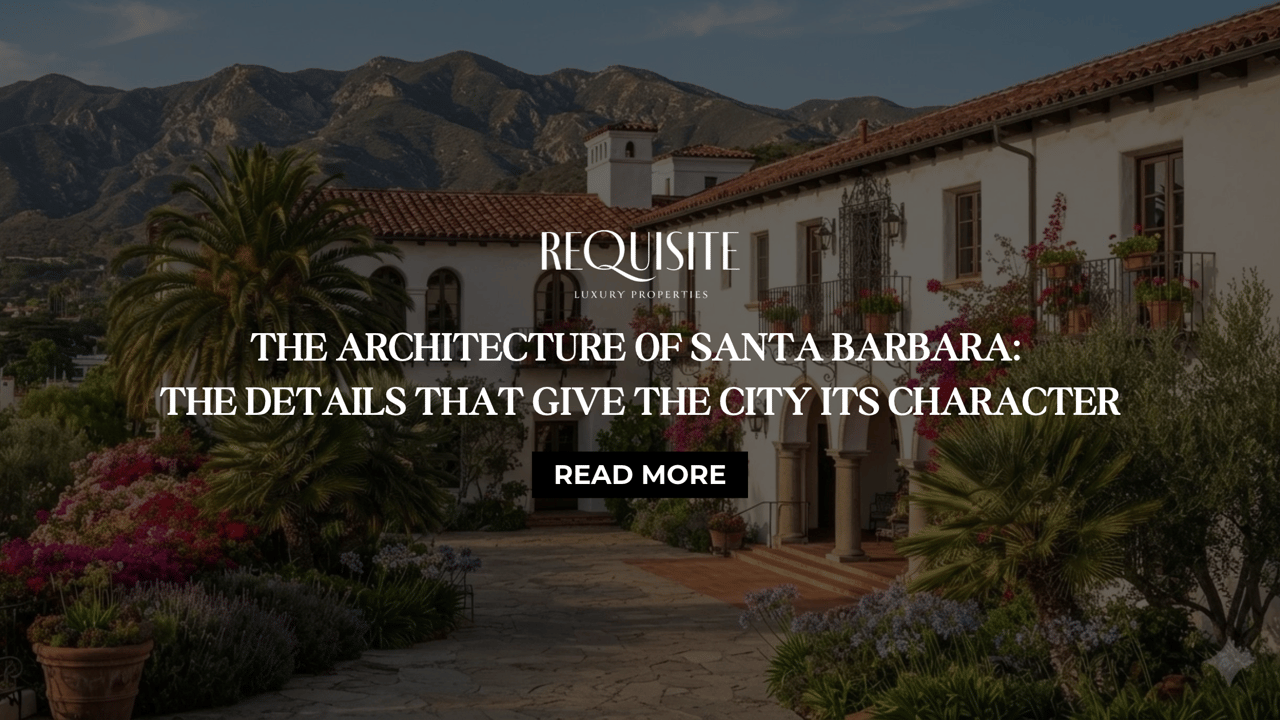
THE ARCHITECTURE OF SANTA BARBARA: THE DETAILS THAT GIVE THE CITY ITS CHARACTER
September 24, 2026
Homeownership & Lifestyle
September 24, 2026
Homeownership & Lifestyle
You know Santa Barbara architecture when you see it.
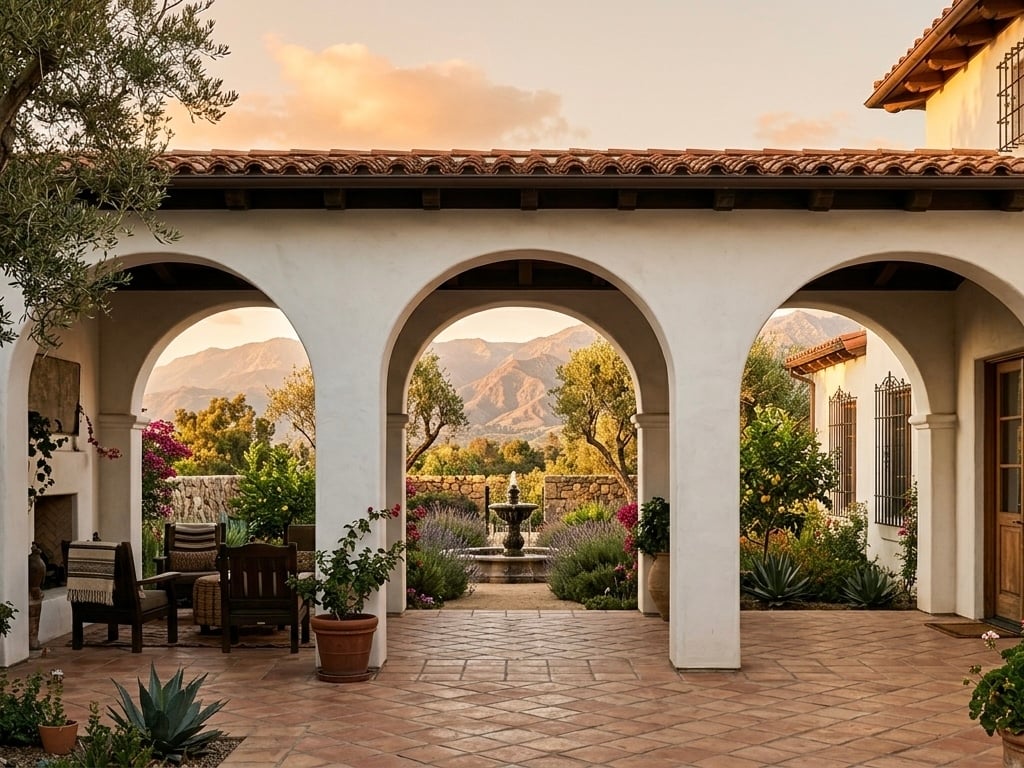
Whitewashed walls glow against a blue California sky. Red clay tile roofs appear between palms and eucalyptus. Arched doorways lead into courtyards you couldn't see from the street. Wrought iron, carved wood, colorful tile, fountains, and gardens soften the edges.
Individually, these details are beautiful.
Together, they've created one of California's most recognizable architectural identities.
But Santa Barbara's character wasn't created by a single style or moment in history. Spanish and Mexican influences, Mediterranean traditions, California's Arts and Crafts movement, and the city's celebrated Spanish Colonial Revival all shaped how Santa Barbara looks today.
The result is something greater than architecture.
It's a sense of place.
And these are some of the details that create it.
To understand why Santa Barbara looks the way it does today, you have to return to the early 20th century.
Spanish and Mediterranean influences were already present throughout the region, but the 1925 Santa Barbara earthquake became a pivotal moment in the city's architectural story.
As downtown rebuilt, civic leaders and architects embraced Spanish Colonial and Mediterranean-inspired design with remarkable consistency.
The result is still visible throughout the city today.
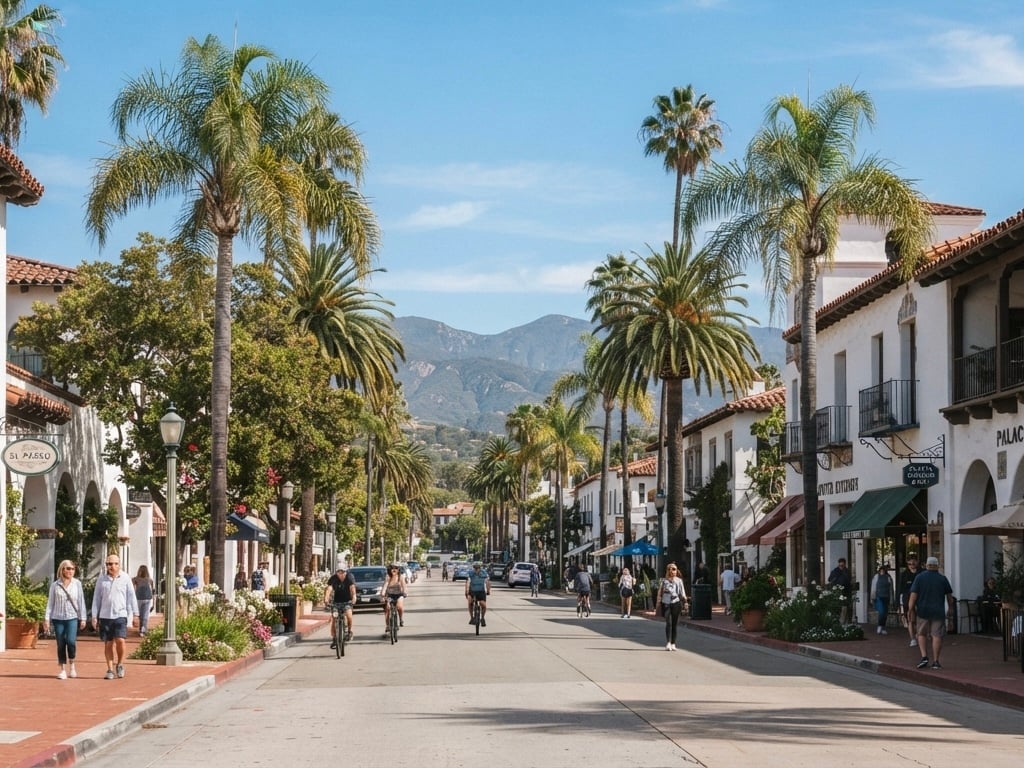
Rather than a downtown defined by competing architectural eras, Santa Barbara developed a visual language built around white stucco, tile roofs, courtyards, arcades, ironwork, and landscaping.
That architectural continuity is one reason the city feels so distinctive.
It doesn't simply contain historic buildings.
The buildings speak to one another.
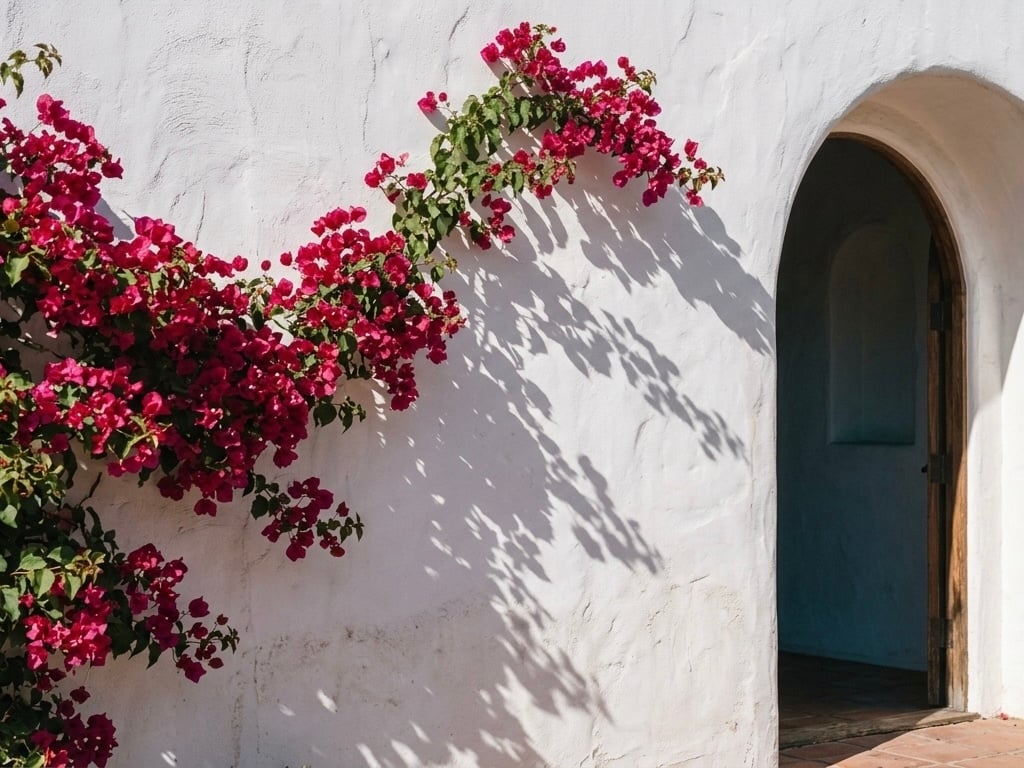
Perhaps no element says Santa Barbara more immediately than white stucco.
Its simplicity provides the backdrop for almost everything else.
Against white walls, terracotta roofs feel warmer. Bougainvillea becomes brighter. Shadows cast by arches become architectural details of their own.
And as the light changes throughout the day, so does the building.
Morning sun can make a façade appear crisp and bright.
Late afternoon warms it.
At dusk, exterior lanterns create entirely different patterns across the textured surface.
The beauty lies partly in restraint.
A seemingly simple wall allows craftsmanship, landscaping, and light to become the decoration.
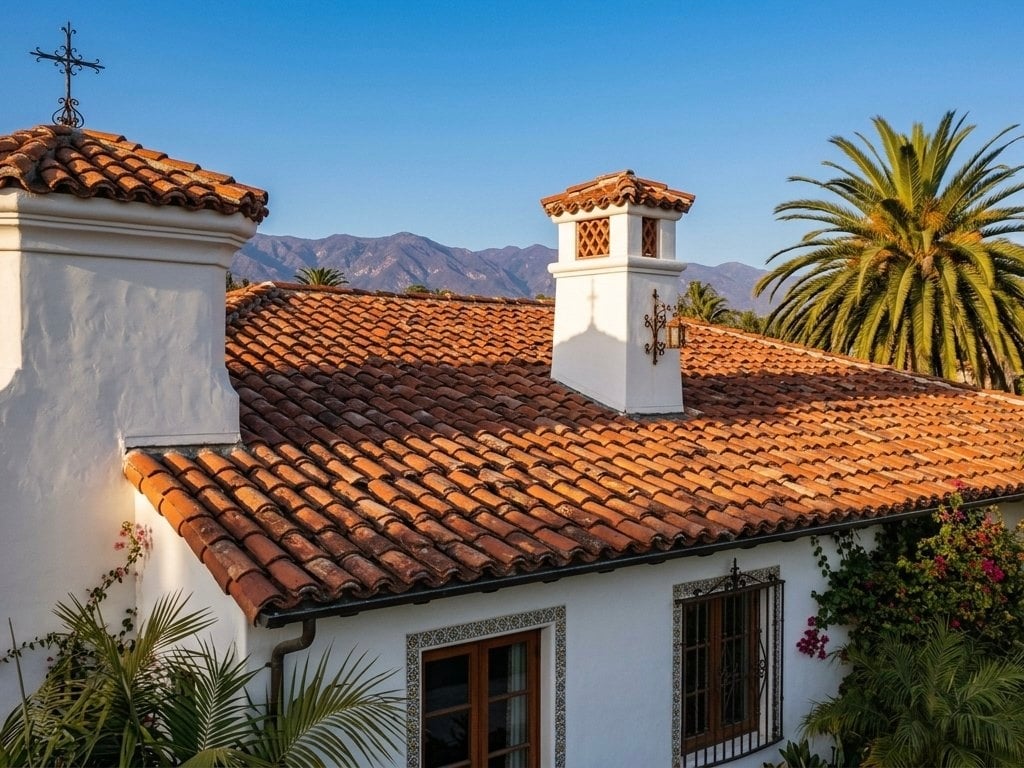
If white stucco creates the canvas, red clay tile often completes the picture.
Spanish-style clay tiles have become inseparable from Santa Barbara's visual identity.
Their warm, earthy color connects naturally with the surrounding landscape—the golden foothills, terracotta pathways, gardens, and mountains.
And unlike perfectly uniform modern materials, traditional clay tile develops character.
Variations in tone create texture.
Weather adds patina.
Rooflines become part of the composition, not something designed to disappear.
Seen from the foothills, those warm red roofs scattered among green trees and white buildings help create the Santa Barbara landscape we recognize instantly.
A doorway could simply be rectangular.
A hallway could simply connect two rooms.
A window could simply frame a view.
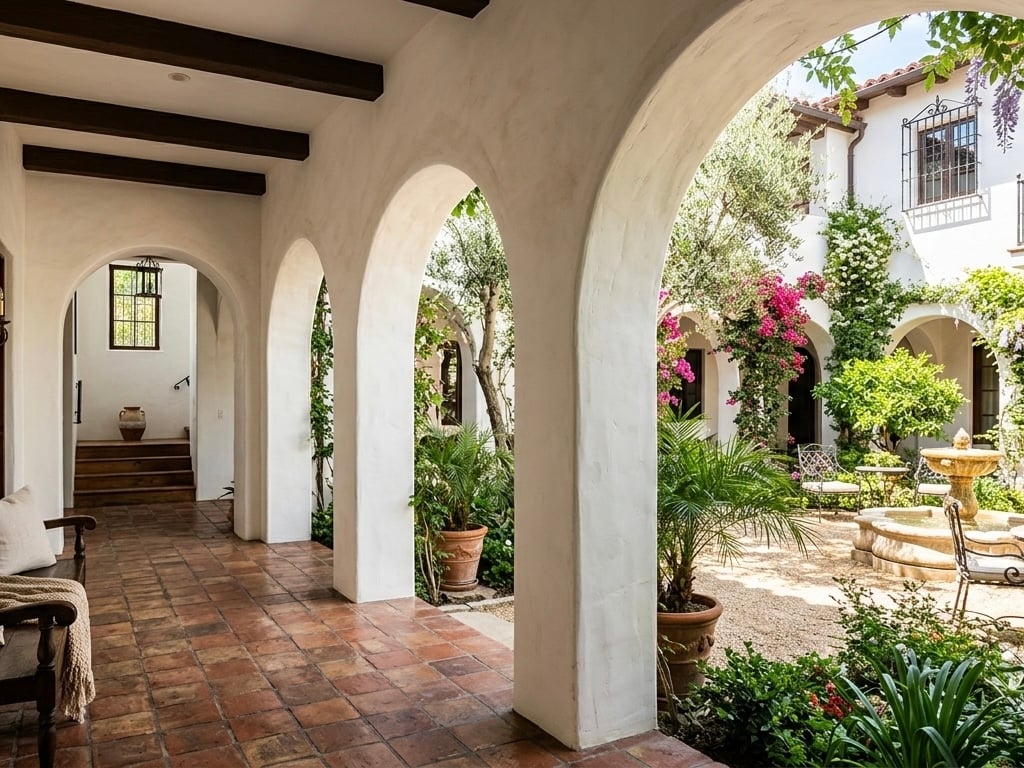
But add an arch, and suddenly the experience feels different.
Arches appear throughout Santa Barbara architecture—in doors, windows, arcades, loggias, interior passages, garden walls, and covered walkways.
They soften architecture that might otherwise feel rigid.
More importantly, they frame what lies beyond.
A garden.
A mountain.
Another room.
A glimpse of the ocean.
Some of the most beautiful Santa Barbara interiors use arches almost like picture frames, revealing the next space gradually rather than all at once.
Santa Barbara architecture often rewards curiosity.
From the street, a property may appear relatively private.
Walk through a gate and an entirely different world opens behind it.
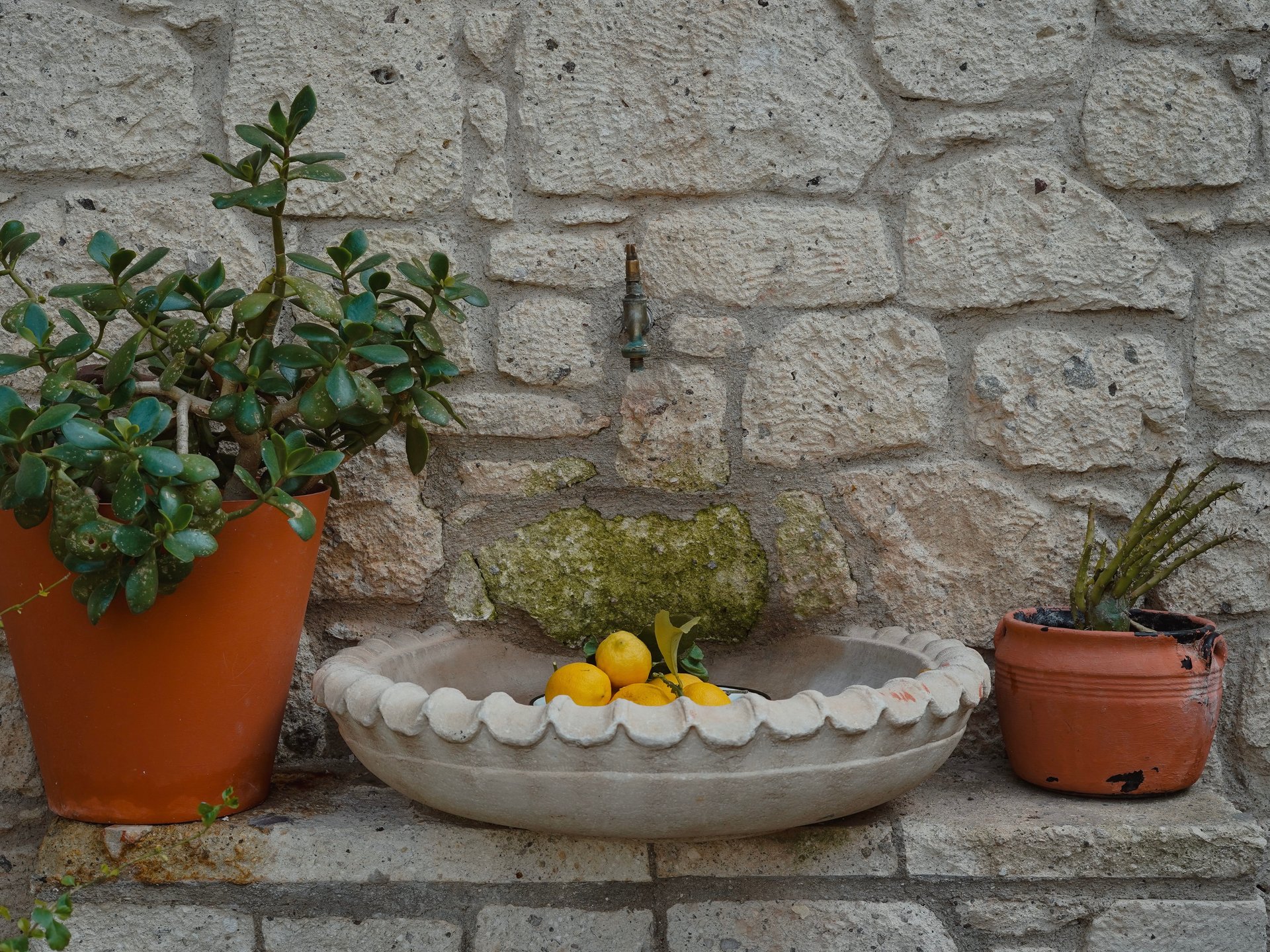
The courtyard is one of the most enduring elements of Spanish and Mediterranean-inspired design—and particularly well suited to Santa Barbara's climate.
It provides light and air while remaining protected.
A fountain can sit at its center.
Citrus trees can grow against the walls.
Doors from several rooms may open toward it, turning the courtyard into both a destination and a point of connection.
It is simultaneously outside and part of the house.
And perhaps more than any other feature, it captures Santa Barbara's distinctive relationship between architecture and outdoor living.
Then comes the color.
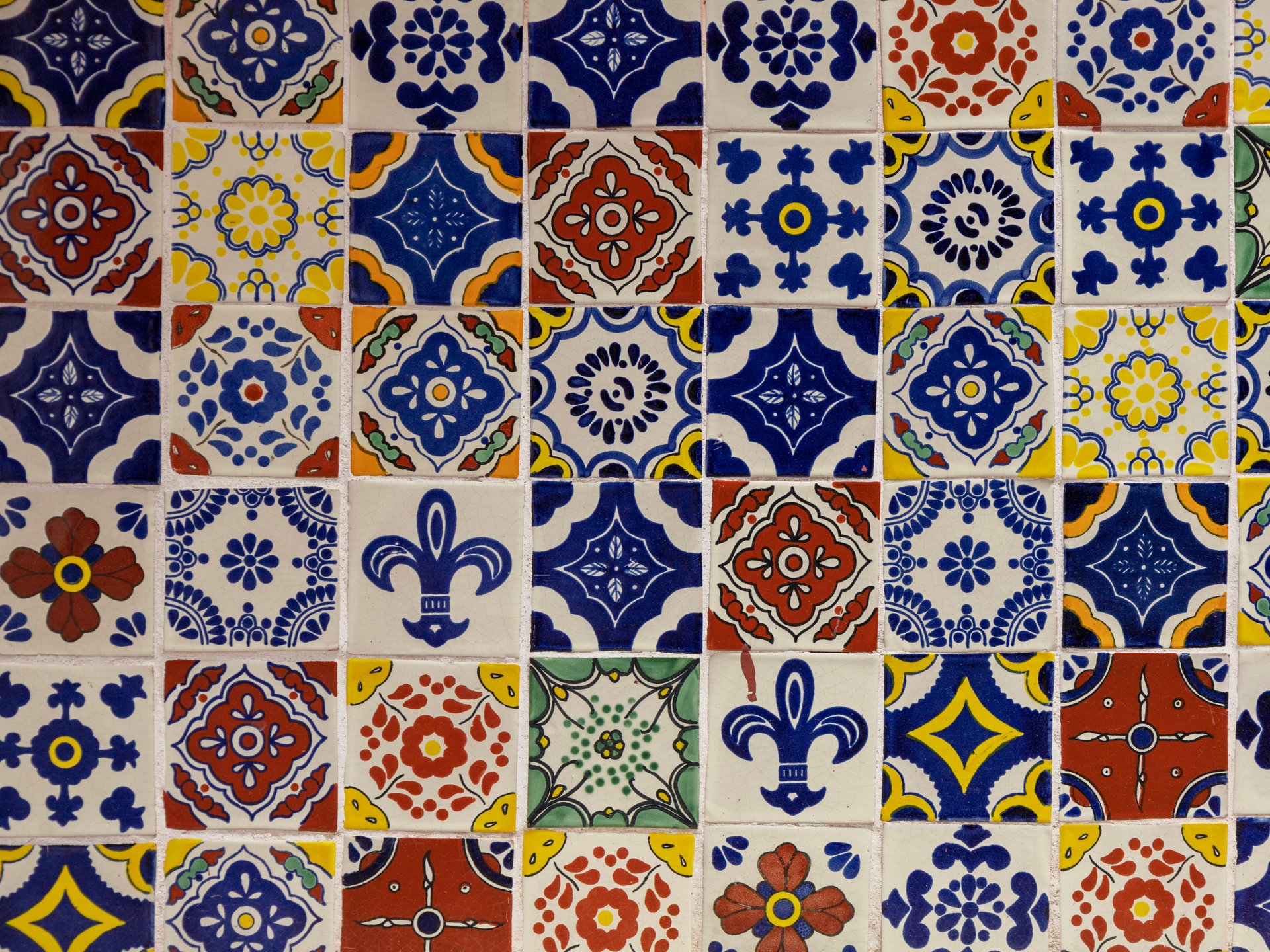
Hand-painted decorative tile brings personality to an architectural palette that might otherwise remain intentionally neutral.
Blue, green, yellow, rust, and intricate geometric patterns appear on stair risers, fountains, fireplaces, kitchen backsplashes, benches, and courtyard walls.
The influence is unmistakably Spanish and Mexican, but in Santa Barbara it has developed a character of its own.
A small amount can transform an entire space.
That's the key.
The tile doesn't necessarily overwhelm the architecture.
It punctuates it.
Look closer, and Santa Barbara's architectural character becomes even richer.
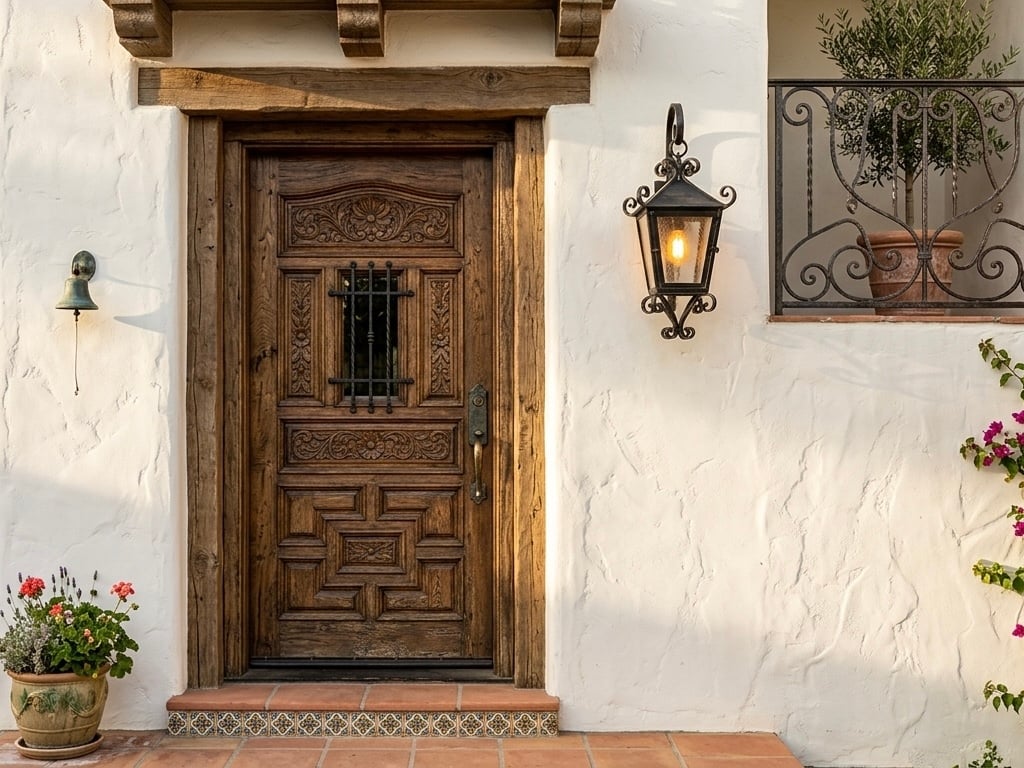
A wrought-iron balcony.
A heavy carved front door.
An iron lantern mounted against white stucco.
Exposed ceiling beams darkened against pale plaster.
A hand-forged railing following a curved staircase.
These details introduce texture and craftsmanship into otherwise simple architectural forms.
They also feel deeply human.
They remind us that memorable architecture isn't only about scale.
Sometimes it's the handle you touch when opening the door.
The lantern beside the entry.
The grain of an old beam overhead.
Small details often make a home feel like it belongs somewhere.
In Santa Barbara, landscaping rarely feels like an afterthought.
Olive trees soften courtyards.
Bougainvillea spills across white walls.
Citrus trees introduce fragrance and color.
Palms create vertical rhythm.
Lavender, rosemary, succulents, and drought-conscious Mediterranean plantings complement the climate.
And mature trees can make even substantial homes feel private and established.
The most successful landscapes don't compete with the architecture.
They complete it.
Over time, the boundary becomes difficult to define.
Is the bougainvillea decorating the house?
Or did the wall simply give the garden somewhere to become architecture?
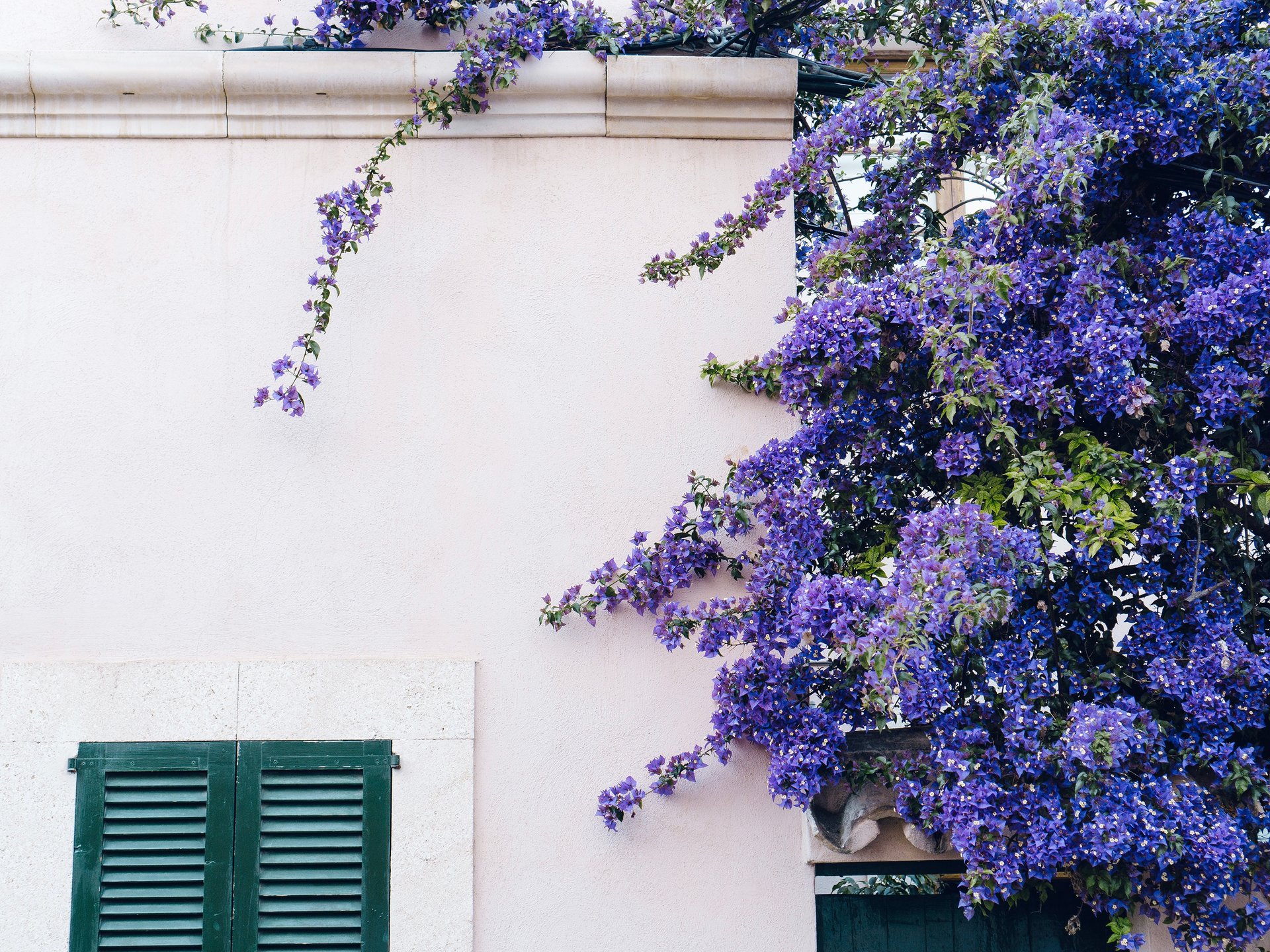
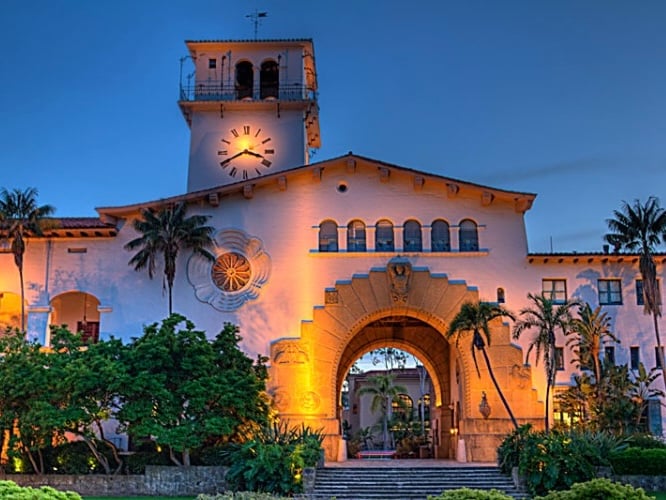
If you want to understand Santa Barbara's architectural identity through a single building, the Santa Barbara County Courthouse is a great place to start.
Completed in 1929, the Spanish-Moorish complex incorporates many of the elements that define the city's architectural vocabulary: white stucco, red tile, arches, decorative tile, wrought iron, murals, courtyards, gardens, and a prominent clock tower.
But what makes it especially compelling is how those elements work together.
Walk beneath an arcade.
Look through an arch toward a garden.
Notice the tile beneath your feet.
Then climb toward the tower and see how the red roofs, white buildings, palms, mountains, and Pacific fit together across the city.
Suddenly, Santa Barbara's architectural identity makes perfect sense.
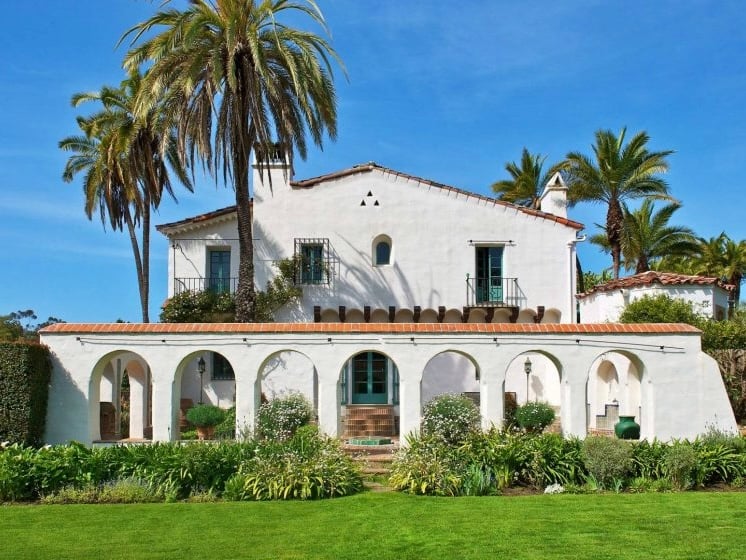
In Montecito, Casa del Herrero offers a more intimate look at the Spanish Colonial Revival movement.
Designed in the 1920s for George Fox Steedman and his wife, Carrie, the estate brings together architecture, decorative arts, craftsmanship, and landscape.
The house and gardens demonstrate something essential about this architectural tradition: beauty comes not from a single dramatic gesture, but from layers.
Architecture.
Furniture.
Tile.
Ironwork.
Gardens.
Views.
Materials.
Everything contributes to the whole.
Today, Casa del Herrero provides a remarkable window into the design philosophy that helped shape the character of Montecito and Santa Barbara during one of the region's most influential architectural periods.
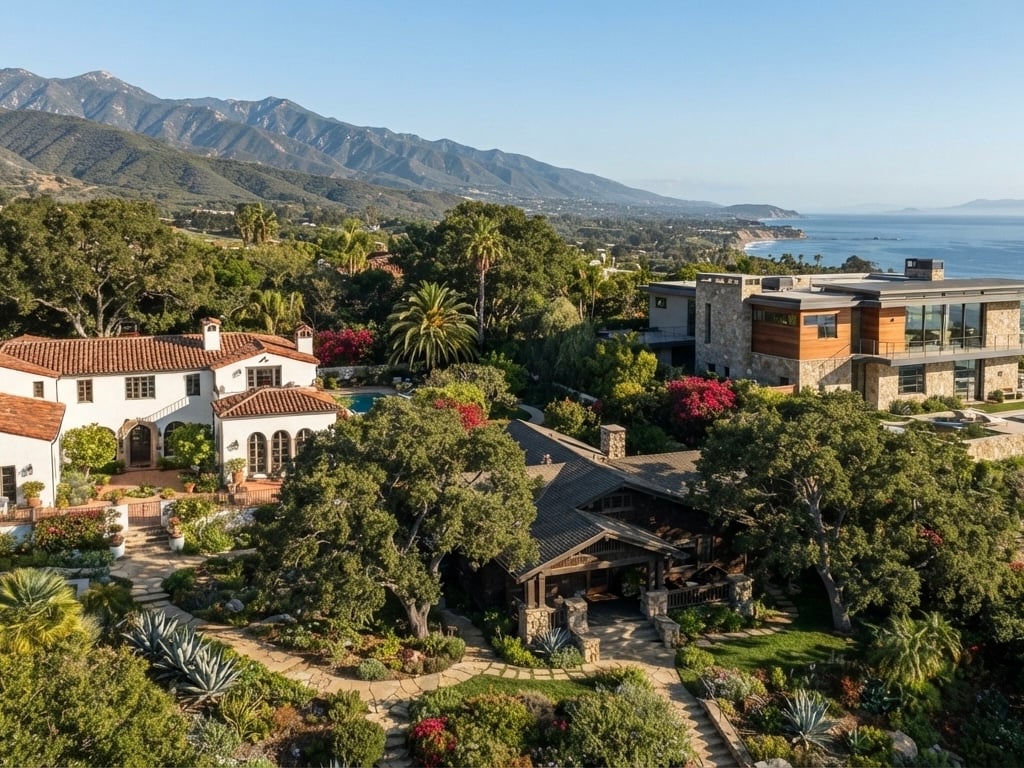
Santa Barbara may be famous for Spanish Colonial Revival architecture, but stopping there would miss much of what makes the region interesting.
You'll also find Craftsman homes, Victorian cottages, Monterey Colonial influences, midcentury residences, ranch houses, contemporary coastal architecture, and modern homes designed to almost disappear into the landscape.
In Montecito, architectural styles can range from historic Spanish estates to East Coast-inspired compounds, modern residences, and homes shaped by Mediterranean and European influences.
That variety matters.
Because Santa Barbara's strongest architecture doesn't necessarily follow one prescribed style.
What often connects the best homes is something subtler:
They respond to the landscape, climate, light, and way people live here.
It isn't necessarily the red tile roof.
Or the stucco.
Or an arch.
You can reproduce those elements almost anywhere.
What makes the architecture here special is how they interact with the place itself.
Doors open because the climate invites them to.
Courtyards work because life can happen outdoors.
Deep windows frame mountains and gardens.
Materials age gracefully beneath California sun.
Landscaping grows into the architecture.
And homes often reveal themselves slowly—from street, to gate, to courtyard, to interior, to view.
That's difficult to reduce to a checklist.
It's atmosphere.
And the most successful Santa Barbara homes have it.
Great architecture can tell you where you are before anyone names the city.
Santa Barbara does that remarkably well.
The white walls.
The clay roofs.
The courtyards hidden behind gates.
The iron lanterns.
The hand-painted tile.
The gardens that seem to have grown around the architecture rather than beside it.
Together, those details have created something increasingly rare: a city with a visual identity strong enough to be immediately recognizable, yet flexible enough to continue evolving.
And perhaps that's why architecture matters so much when thinking about life here.
A home isn't simply located in Santa Barbara.
At its best, it becomes part of Santa Barbara.
At REQUISITE Luxury Properties, we believe understanding a property means understanding more than bedrooms, square footage, and location. It's also recognizing the architecture, craftsmanship, landscape, and sense of place that give a home its character—and make Santa Barbara unlike anywhere else.
Santa Barbara is best known for Spanish Colonial Revival architecture, characterized by white stucco walls, red clay tile roofs, arches, courtyards, decorative tile, wrought iron, and Mediterranean-inspired landscaping.
Spanish and Mexican architectural influences have long been part of the region, but Santa Barbara's cohesive modern architectural identity developed particularly strongly during the early 20th century. Rebuilding after the 1925 earthquake helped reinforce Spanish Colonial Revival and Mediterranean-inspired architecture throughout downtown.
Common elements include white stucco, terracotta roof tile, arches, courtyards, fountains, wrought iron, carved wood, decorative Spanish or Mexican tile, exposed beams, and Mediterranean landscaping.
The Santa Barbara County Courthouse is one of the city's most important architectural landmarks. Other places to explore include downtown Santa Barbara, El Pueblo Viejo, the Presidio area, and Casa del Herrero in Montecito.
No. Santa Barbara and Montecito include a broad mix of architecture, including Spanish Colonial Revival, Mediterranean, Craftsman, Victorian, Monterey Colonial, ranch, midcentury, and contemporary homes.
The best realtor combines local market expertise with personalized service and a deep understanding of the luxury lifestyle.
At REQUISITE Luxury Properties, we help buyers and sellers navigate the luxury market with local expertise, strategic guidance, and exceptional client care.
Stay up to date on the latest real estate trends.

Life Transitions & Downsizing
October 22, 2026
There's no one-size-fits-all answer. Discover how your lifestyle, comfort, and long-term goals can guide your next move.
Homeownership & Lifestyle
October 16, 2026
Simple ways to prepare your Santa Barbara home for the season ahead.

Homeownership & Lifestyle
October 9, 2026
A smaller home doesn't have to mean a smaller life. Sometimes, the right move is about creating more room for what matters now.

Community & Local Living
October 1, 2026
From wine harvest and fresh seafood to art, music, golden-hour walks, and warm days by the coast—October may be one of Santa Barbara's best-kept seasonal secrets.
Homeownership & Lifestyle
September 24, 2026
White stucco, red tile roofs, hidden courtyards, hand-painted tile, and centuries of influence—an architectural language that makes Santa Barbara unmistakable.

Community & Local Living
September 17, 2026
Fresh from the Pacific, grown along the Central Coast, and shaped by a culture that knows the best meals often begin close to home.
Homeownership & Lifestyle
September 10, 2026
Courtyards, open doors, garden rooms, and ocean-facing terraces—where the architecture of home is shaped by the landscape outside.
Community & Local Living
September 3, 2026
Harvest season, golden afternoons, and unforgettable wine-country escapes just beyond the coast.

Community & Local Living
August 27, 2026
Your guide to art, music, coastal celebrations, and the experiences welcoming fall to the American Riviera.
REQUISITE Luxury Properties leverages its business, negotiation, and regulatory experience to consult with buyers and sellers of properties to ensure they have successful and profitable transactions.