DOWNSIZING WITHOUT DOWNGRADING: CREATING A LIFESTYLE THAT FITS YOUR NEXT CHAPTER
October 9, 2026
Homeownership & Lifestyle

October 9, 2026
Homeownership & Lifestyle
For years, the idea of a "dream home" often follows a familiar trajectory.
More bedrooms.
More square footage.
A larger yard.
More space for children, guests, holidays, hobbies, and everything accumulated along the way.
And for a certain chapter of life, that home may have been exactly right.
But eventually, the question can change.
Instead of asking, "How much space do we need?" you may begin asking:
"How do we actually want to live now?"
Perhaps the children have moved out. The yard takes more time than you want to give it. You're traveling more. Stairs are becoming less appealing. Or you simply realize that much of the house is rarely used.
That's when downsizing can become something much more interesting than moving into a smaller home.
It can become an opportunity to redesign everyday life.
Before looking at square footage, bedrooms, or neighborhoods, start somewhere else.
Picture an ordinary Tuesday.
Not a holiday.
Not a dinner party.
Not the weekend when everyone comes to visit.
Just a normal day.
Where do you have coffee?
Do you walk somewhere in the morning?
Do you work from home?
How often do guests actually stay overnight?
Would you rather spend Saturday maintaining a large property—or meeting friends for lunch, heading to the beach, traveling, or doing almost anything else?
These questions can tell you more about the home you need next than a list of property features ever could.
Downsizing works best when you aren't simply trying to find a smaller version of the house you're leaving.
You're designing around the life you're living now.

"Downsizing" can sound like a list of things you're giving up.
A bedroom.
A formal dining room.
A large yard.
Storage.
Square footage.
But those numbers don't tell you what you may be gaining.
Less maintenance.
Less unused space.
More freedom to travel.
A better location.
A home that's easier to manage.
More walkability.
A floor plan that works better.
Perhaps even more time.
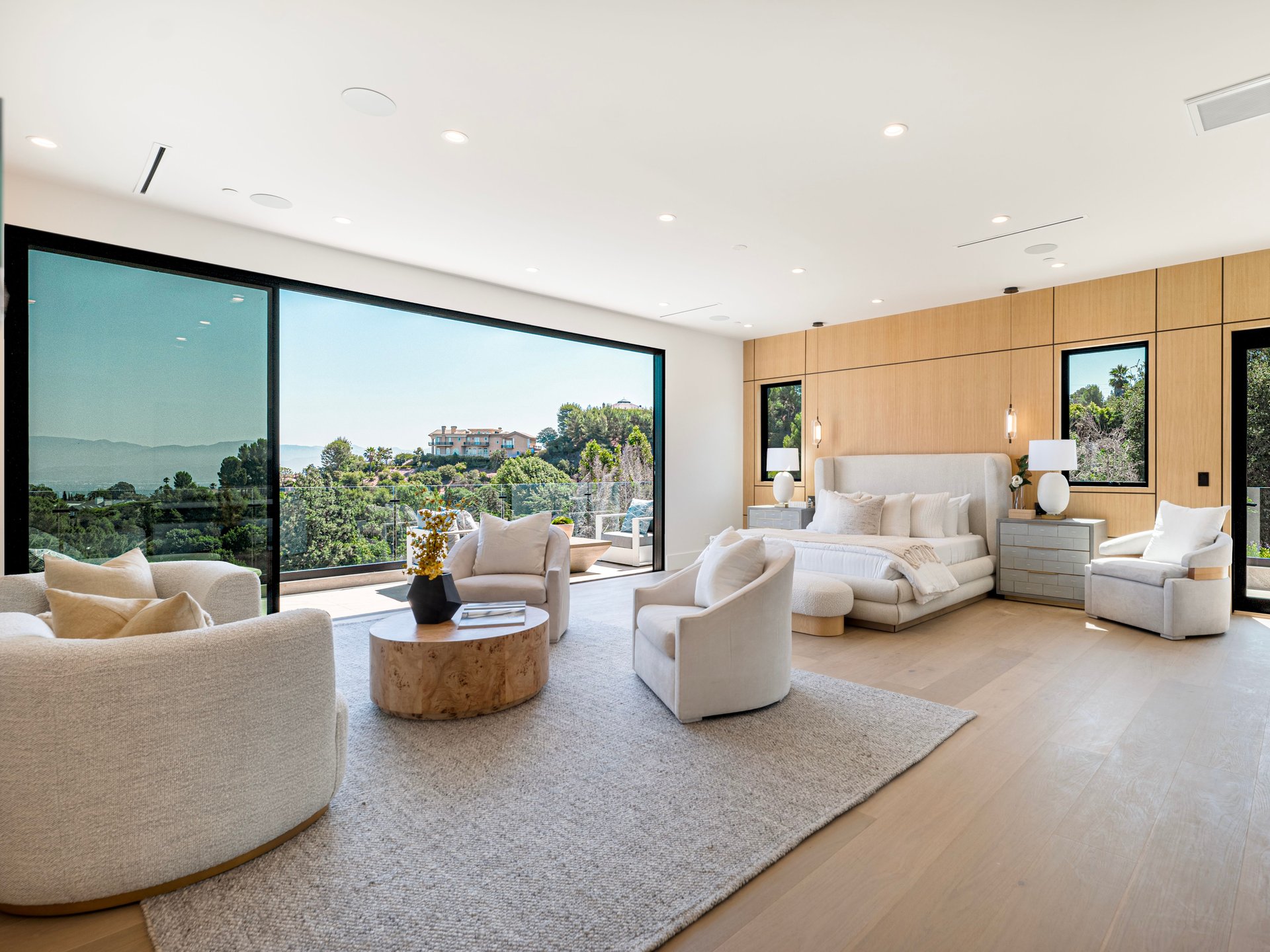
A 2,000-square-foot home that supports the way you actually live can feel more generous than a 4,000-square-foot home filled with rooms you rarely enter.
That's why we prefer to think about the process less as living with less and more as living with greater intention.
Here's another way to approach the decision.
Instead of beginning with what you're ready to eliminate, make a list of what you'd like more of.
More travel?
More mornings walking to coffee?
More dinners out?
More time with family?
More privacy?
More community?
More time outdoors?
More freedom to lock the door and leave for several weeks?
Your next home should help make those things easier.
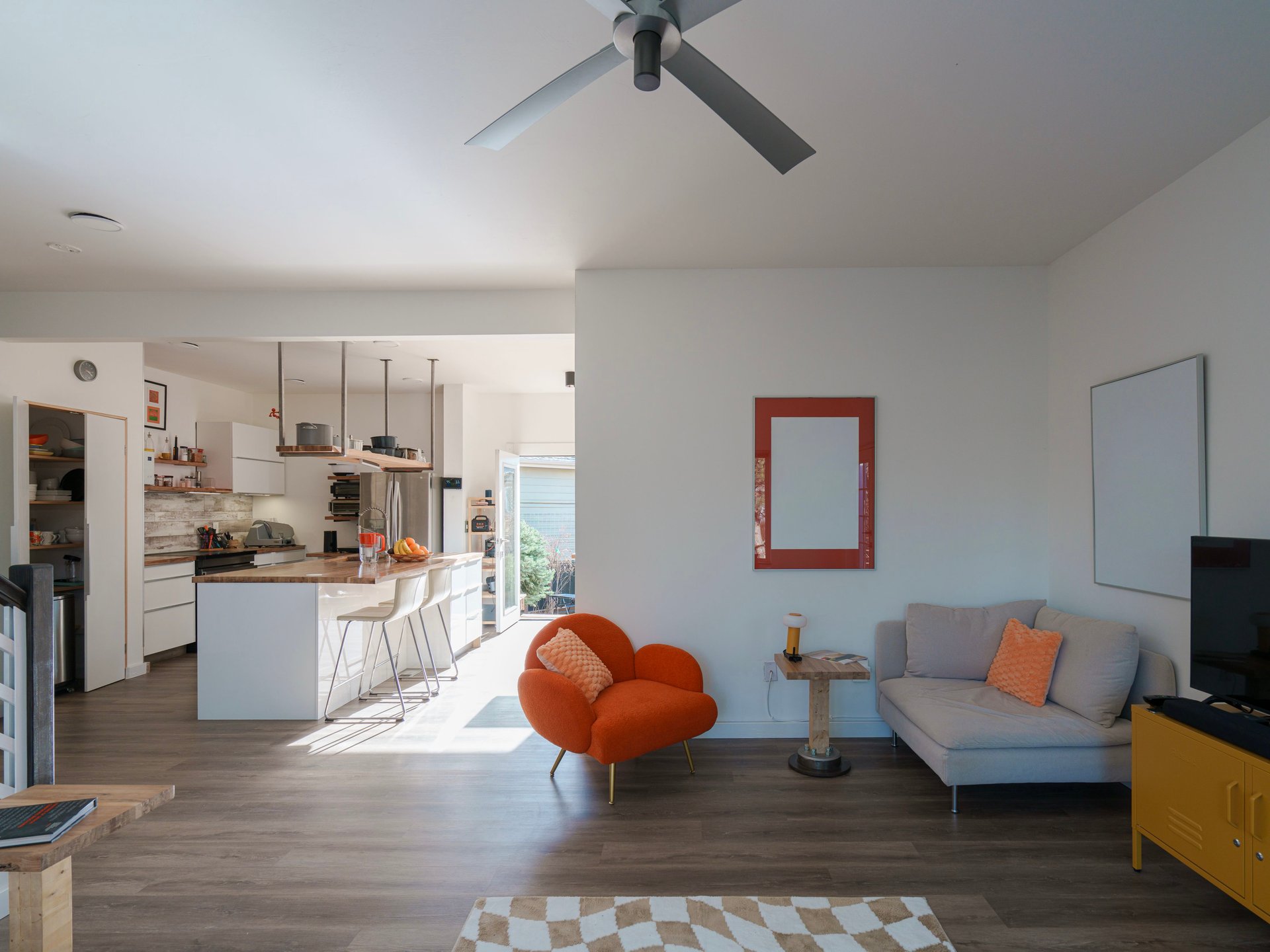
For someone who travels frequently, a low-maintenance condominium or lock-and-leave residence may feel liberating.
For someone who loves gardening, losing all outdoor space may be the wrong compromise—but a private courtyard could be perfect.
For someone who values community, moving closer to restaurants, shops, friends, or activities might matter more than keeping an extra guest room.
Downsizing becomes much clearer when you stop measuring the next home against the old one.
Measure it against the life you want.

One feature often moves higher on the priority list during a transition: single-level living.
A home without stairs can make everyday life simpler now while also providing flexibility for the future.
That doesn't mean compromising on architecture or character.
Throughout Santa Barbara and surrounding communities, single-level residences range from cottages and condominiums to ranch-style homes, sophisticated contemporary properties, and residences with courtyards and private outdoor areas.
The goal isn't necessarily to find a home designed around limitations.
It's to choose one that requires fewer compromises as life changes.
A thoughtful floor plan can be one of the most valuable luxuries.
Sometimes the space you give up at home can be replaced by something much larger outside the front door.
A smaller private yard might feel like an easy trade if you're close to the beach.
A condominium may become much more appealing if you can walk to restaurants, coffee, shops, parks, or cultural activities.
Less property to maintain can mean more time enjoying Santa Barbara itself.
That might mean living closer to downtown.
Near the waterfront.
Around Coast Village Road.
Or in another neighborhood where everyday destinations become easier to reach.
In that sense, downsizing isn't only about choosing a different home.
It can be about choosing a different relationship with your community.

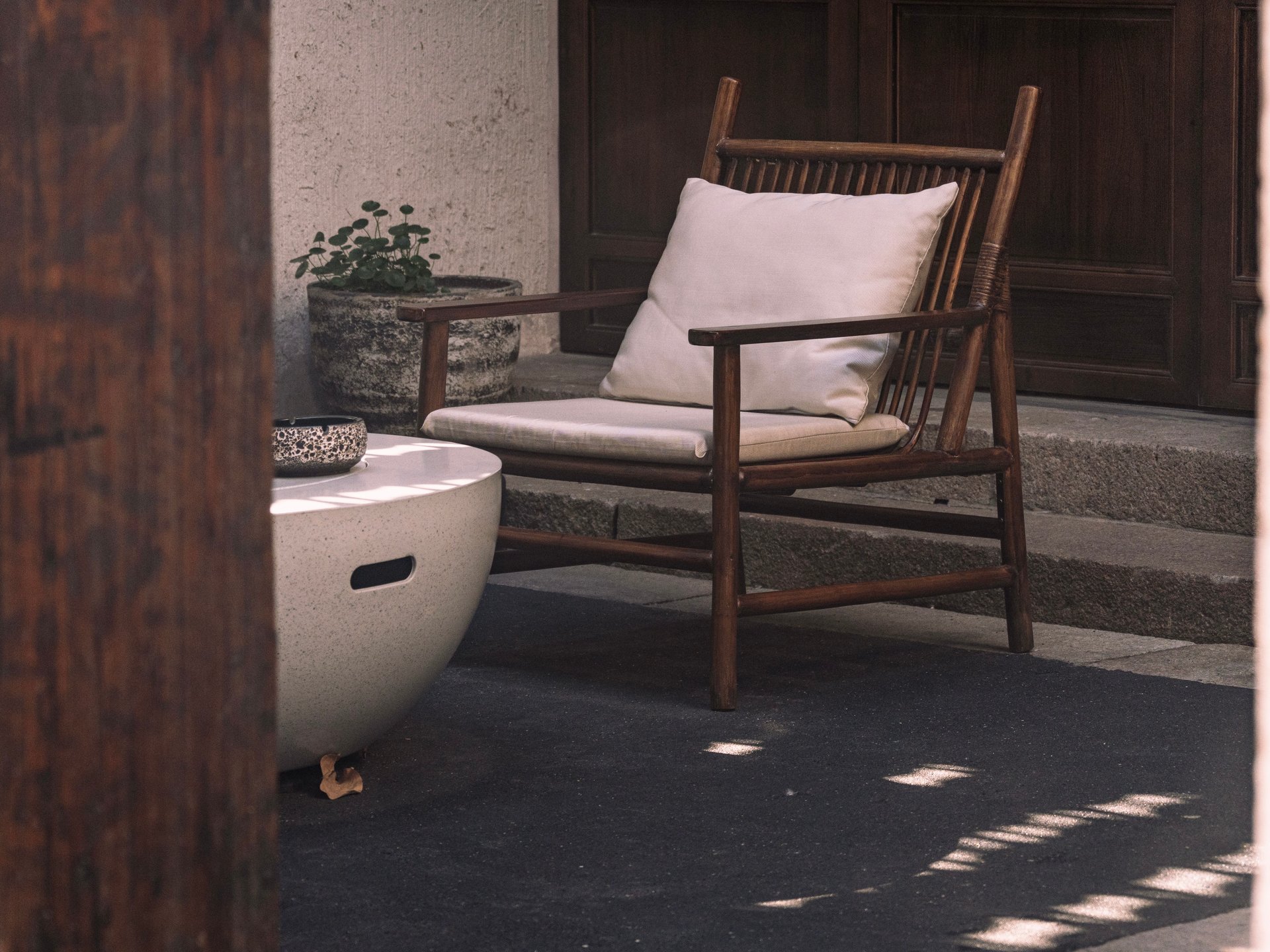
Moving to a smaller property doesn't necessarily mean giving up outdoor living.
In Santa Barbara, we'd argue the opposite.
Outdoor space can be too important to the lifestyle here to dismiss entirely.
The question is what kind of outdoor space you actually use.
Perhaps you don't need expansive lawns and elaborate landscaping.
Maybe what you really love is having coffee outside.
Growing herbs.
Grilling.
Reading in the sun.
Having friends over for dinner.
A courtyard, terrace, patio, balcony, or manageable garden can preserve those rituals without requiring the maintenance of a much larger property.
The right outdoor space isn't always the biggest.
It's the one you use.
Then comes the harder part.
The things.
A longtime home can hold decades of them.
Furniture.
Books.
Art.
China.
Photographs.
Children's belongings.
Boxes that haven't been opened in years.
Objects inherited from parents.
Objects you imagined your children would want.
Objects nobody quite remembers why you're keeping.
Trying to decide everything at once can quickly become overwhelming.
Instead, start with a different question:
What would I be genuinely disappointed not to have in my next home?
Identify those first.
From there, possessions can gradually fall into categories: keep, give to family, sell, donate, archive, or let go.
The goal isn't to erase the life you've built.
It's to choose which parts of it should travel with you.

This can be a difficult one.
Many longtime homeowners maintain significant space because their children, grandchildren, extended family, or friends might visit.
And having everyone together can be wonderful.
But how often does it actually happen?
If guests stay for ten nights a year, does it make sense to keep multiple bedrooms unused for the other 355 nights?
There isn't one correct answer.
For some families, absolutely.
For others, a flexible office/guest room, a nearby hotel, a sleeper sofa, or a smaller second bedroom may work beautifully.
The point isn't to stop welcoming people.
It's to make sure your everyday home isn't designed entirely around occasional days.

A good transition solves today's needs.
A great one considers tomorrow's.
You don't need to predict exactly how life will change.
But you can make choices that preserve options.
Would stairs eventually become inconvenient?
Is the primary bedroom easily accessible?
Could a bathroom accommodate future modifications if needed?
Is the home close to the people and places important to you?
How demanding is the maintenance?
Could you comfortably leave the property when traveling?
The goal isn't to design your life around what might happen.
It's simply about avoiding a home that unnecessarily limits your options.
Leaving a longtime home is rarely just a real estate decision.
It's the kitchen where birthdays happened.
The doorway where you marked children's heights.
The garden you planted.
The dining room where you celebrated holidays.
The neighborhood where routines became traditions.
Knowing that moving makes practical sense doesn't automatically make leaving easy.
That's why a thoughtful transition shouldn't begin with a photographer, a listing agreement, or a moving truck.
It can begin months earlier.
Talk about the move.
Walk through the house.
Decide what matters.
Let family members participate where appropriate.
Give yourself time to process what you're leaving—and to imagine what comes next.
Grief can come with a transition.
There can also be excitement.
Both can be true.

A significant home transition involves far more than choosing a new property and selling the old one.
There may be decades of belongings to sort.
Repairs to coordinate.
Furniture to move or sell.
Documents to organize.
Vendors to schedule.
A property to prepare.
Family members to keep informed.
A new home to identify.
And eventually, two real estate timelines that may need to work together.
Trying to manage every piece simultaneously can make an already emotional process unnecessarily stressful.
That is where the right team becomes especially valuable.
A transition can involve real estate professionals, organizers, estate-sale specialists, movers, contractors, designers, financial advisors, attorneys, or other professionals depending on the circumstances.
You may not need all of them.
But you shouldn't have to figure out every step on your own.

There is a meaningful difference between selling a property and helping someone leave a home they've lived in for decades.
The transaction may be one part of the process.
The transition is everything surrounding it.
At REQUISITE Luxury Properties, we approach these moves with that larger picture in mind.
That can mean helping you think through timing before you're ready to sell, identifying what the next home needs to accomplish, coordinating the professionals who prepare the property, and creating a clear path from where you are now to where you'd like to be.
Because sometimes the most important first step isn't putting your home on the market.
It's simply understanding your options.

Downsizing is an imperfect word.
It focuses on the one thing that's easy to measure: size.
But square footage tells us very little about quality of life.
Your next home may be smaller and better located.
Smaller and easier to maintain.
Smaller and more beautiful.
Smaller and better designed.
Smaller and closer to the people you love.
Smaller and easier to leave when the world calls.
Smaller—and much better suited to the person you are today.
That's not necessarily a downgrade.
It may be an upgrade in all the ways that matter.
At REQUISITE Luxury Properties, we help clients approach downsizing and real estate transitions thoughtfully, with guidance that begins well before a home goes on the market.
Because the goal isn't simply to leave one home.
It's to feel confident about where you're going next.
You don't need to wait until moving becomes necessary. Beginning the conversation early gives you more time to evaluate your options, understand the market, organize belongings, prepare your current property, and identify what you want from your next home.
Consider how much of the property you actually use, how much time and money it requires to maintain, whether the layout still works for you, and whether keeping the home supports—or limits—the lifestyle you want today.
The answer depends on your priorities, but common considerations include single-level living, lower maintenance, convenient location, manageable outdoor space, accessibility, storage, guest flexibility, community, security, and lock-and-leave convenience.
No. Downsizing is about deciding what deserves space in your next chapter, not eliminating everything you own. Starting early allows you to make thoughtful decisions about what to keep, share with family, sell, donate, store, or let go.
There is no single strategy that works for everyone. The right sequence depends on your finances, local market conditions, the type of property you're seeking, timing, and your comfort level. A real estate professional can help you evaluate different scenarios before making either move.
Yes. For complex transitions, an experienced real estate advisor can help develop a timeline, identify housing options, recommend and coordinate appropriate service providers, prepare the existing property for sale, and help manage the real estate pieces of the transition.
The best realtor combines local market expertise with personalized service and a deep understanding of the luxury lifestyle.
At REQUISITE Luxury Properties, we help buyers and sellers navigate the luxury market with local expertise, strategic guidance, and exceptional client care.
Stay up to date on the latest real estate trends.
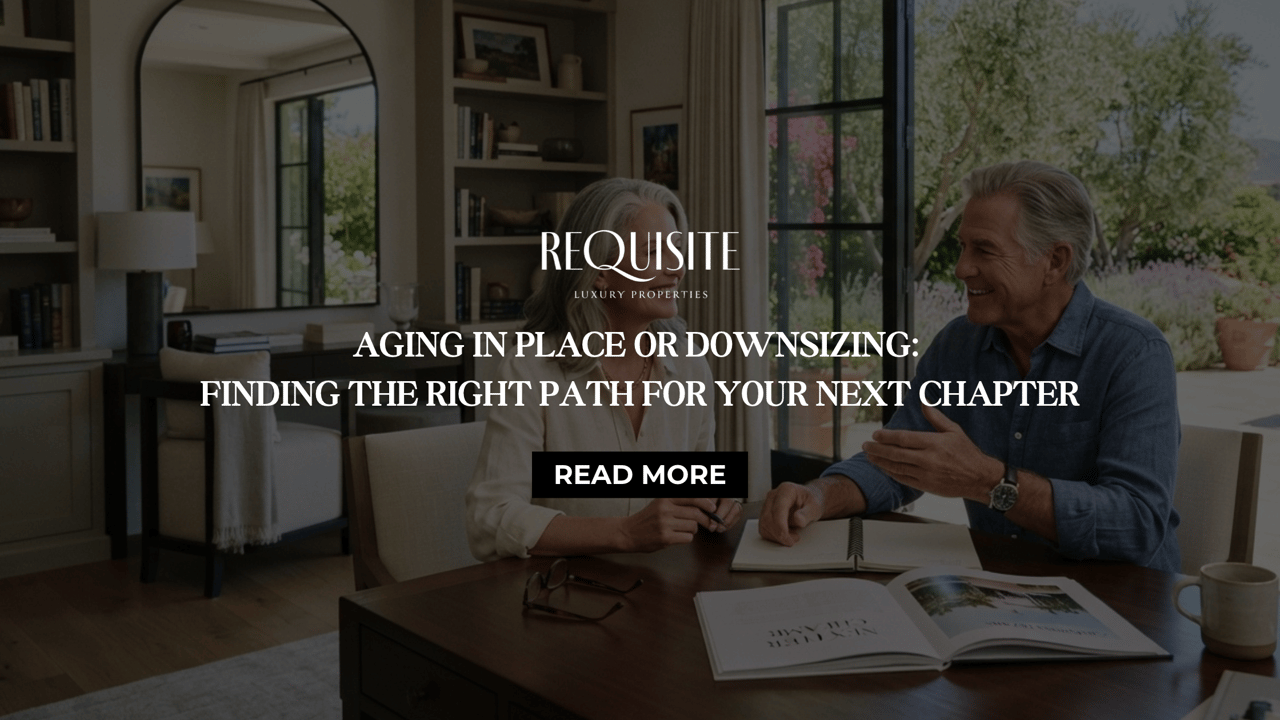
Life Transitions & Downsizing
October 22, 2026
There's no one-size-fits-all answer. Discover how your lifestyle, comfort, and long-term goals can guide your next move.

Homeownership & Lifestyle
October 16, 2026
Simple ways to prepare your Santa Barbara home for the season ahead.
Homeownership & Lifestyle
October 9, 2026
A smaller home doesn't have to mean a smaller life. Sometimes, the right move is about creating more room for what matters now.

Community & Local Living
October 1, 2026
From wine harvest and fresh seafood to art, music, golden-hour walks, and warm days by the coast—October may be one of Santa Barbara's best-kept seasonal secrets.

Homeownership & Lifestyle
September 24, 2026
White stucco, red tile roofs, hidden courtyards, hand-painted tile, and centuries of influence—an architectural language that makes Santa Barbara unmistakable.

Community & Local Living
September 17, 2026
Fresh from the Pacific, grown along the Central Coast, and shaped by a culture that knows the best meals often begin close to home.

Homeownership & Lifestyle
September 10, 2026
Courtyards, open doors, garden rooms, and ocean-facing terraces—where the architecture of home is shaped by the landscape outside.

Community & Local Living
September 3, 2026
Harvest season, golden afternoons, and unforgettable wine-country escapes just beyond the coast.

Community & Local Living
August 27, 2026
Your guide to art, music, coastal celebrations, and the experiences welcoming fall to the American Riviera.
REQUISITE Luxury Properties leverages its business, negotiation, and regulatory experience to consult with buyers and sellers of properties to ensure they have successful and profitable transactions.